
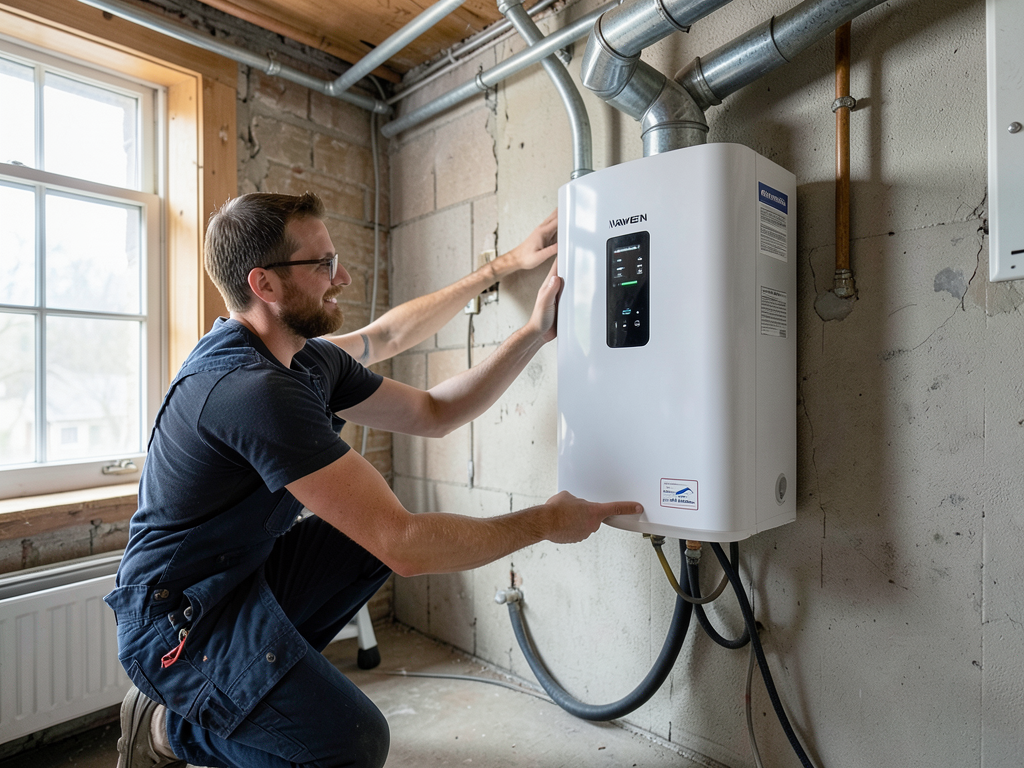
Why Chicago Winters Make Tankless Water Heater Choice Critical
Chicago winters test every home system and your water heater faces the harshest conditions. When Lake Michigan water temperatures drop to 35-40°F incoming groundwater forces your unit to work overtime. A standard tankless heater that delivers 8 gallons per minute in Georgia might struggle to produce 4 GPM here during January’s coldest days.
Older Chicago bungalows in neighborhoods like Lincoln Park and Lakeview often have 1/2-inch gas lines that cannot support high-BTU tankless units. The city’s high clay content soil also creates unique venting challenges for condensing models. These factors make choosing between Navien and Rinnai more than a brand preference—it becomes a climate-specific decision.
Groundwater Temperature Impact on Tankless Performance
Chicago’s location next to Lake Michigan creates extreme groundwater temperature swings. Winter water enters your home at 35-40°F compared to 50-55°F in southern states. This 15-20 degree difference means your tankless unit must raise water temperature by 70 degrees instead of 50 to reach a comfortable 120°F shower temperature.
The temperature rise requirement directly affects flow rate. A Navien NPE-240A2 rated for 11 GPM at 35°F incoming water delivers only 7-8 GPM during polar vortex conditions. Rinnai’s RU199iN similarly drops from 11 GPM to about 7.5 GPM when handling Chicago’s coldest water. This performance gap separates units built for northern climates from those designed for milder regions. EPA Water Heater Selection Guide.
Top Tankless Models Built for Chicago’s Climate
Both Navien and Rinnai manufacture condensing units specifically engineered for cold climates. These models use stainless steel heat exchangers that resist mineral buildup from Chicago’s hard water. The condensing design captures waste heat that traditional units lose through exhaust.
Navien’s NPE-240A2 offers 199,000 BTU input with a 15-year heat exchanger warranty. The unit includes a built-in recirculation pump that eliminates the cold-water sandwich effect common in larger Chicago homes. Rinnai’s RU199iN provides similar BTU output but uses a different control system that some technicians find more intuitive for troubleshooting.
Rheem’s Professional Prestige series also performs well in Chicago but lacks some of the smart features found in Navien and Rinnai models. For homes in Wicker Park or Bucktown with limited mechanical space, the compact profile of these high-efficiency units becomes a significant advantage. Wicker Park Sewer Line Repair Specialists for Older Chicago Homes.
Chicago Home Sizing Guide for Tankless Units
Proper sizing prevents the most common tankless water heater complaint: not enough hot water during simultaneous use. A family of four in a Lincoln Park two-flat typically needs 8-10 GPM to run a shower, dishwasher, and washing machine together.
Calculate your needs by adding fixture flow rates. Standard showerheads use 2.5 GPM while older models can draw 5 GPM. Kitchen faucets average 2.2 GPM and washing machines need 2-3 GPM. During Chicago winters multiply these numbers by 0.7 to account for the reduced flow from cold groundwater.. Read more about Plumbing Requirements for Adding an Outdoor Kitchen to Your Sauganash Backyard.
Homes built before 1950 often require gas line upgrades from 1/2-inch to 3/4-inch to support modern tankless units. This retrofit adds $800-1,200 to installation costs but prevents dangerous pressure drops that can damage the heat exchanger.
Chicago Building Code Requirements for Tankless Installation
Chicago plumbing code mandates specific venting materials for condensing tankless units. Category III stainless steel vent pipe replaces the PVC used in other cities. This requirement protects against the highly acidic condensate produced when natural gas burns in high-efficiency mode.
Mechanical permits cost $150-250 and inspections ensure proper combustion air intake. Homes in historic districts like Old Town face additional review if exterior vent penetrations change the building facade. The city requires seismic straps on all water heaters regardless of fuel type.
Professional installation affects warranty coverage. Navien and Rinnai both void heat exchanger warranties if non-licensed contractors perform the work. The installation must include a dedicated electrical circuit and proper gas pressure testing to 7 inches water column for natural gas units.
Hard Water Challenges in Chicago Tankless Systems
Chicago’s Lake Michigan water contains 8-12 grains per gallon of hardness minerals. These calcium and magnesium deposits accumulate inside heat exchangers reducing efficiency by 25-30% within three years without treatment. The problem accelerates in tankless units because water flows through narrow passages continuously.
Scale buildup causes hot spots that crack heat exchanger walls. Symptoms include reduced flow rate, longer wait times for hot water, and error codes for high exhaust temperatures. Professional descaling costs $300-500 annually but prevents $1,500-2,000 heat exchanger replacements.
Installing a whole-house water softener reduces scale formation but adds $1,500-2,500 upfront. Some homeowners choose electronic scale prevention devices that cost less but provide limited protection in Chicago’s hard water conditions.
Energy Efficiency and Operating Costs in Illinois Climate
Tankless water heaters save 30-40% on energy costs compared to traditional tanks. In Chicago this translates to $150-200 annual savings for a typical household. The units achieve these savings by eliminating standby heat loss from 40-50 gallon storage tanks. Energy Star Water Heaters.
ComEd and Peoples Gas offer rebates of $100-300 for Energy Star certified tankless units. These incentives reduce payback time from 7-8 years to 5-6 years. The programs require professional installation and submission of efficiency ratings.
Winter operation affects efficiency. Condensing units maintain 95% efficiency even with 35°F incoming water. Non-condensing models drop to 80-85% efficiency as exhaust temperatures rise to compensate for the temperature difference.
Maintenance Requirements for Chicago Tankless Systems
Annual maintenance prevents 90% of tankless water heater failures. Chicago’s mineral content and temperature extremes create unique challenges. The maintenance visit includes heat exchanger flushing, burner inspection, and venting system check.
Hard water areas need more frequent descaling. Homes in Rogers Park or Edgewater with well water may require quarterly maintenance. The service includes testing gas pressure, checking for carbon monoxide leaks, and verifying error code history.
Filter replacement every six months prevents debris from entering the heat exchanger. The inlet filter catches sand and mineral particles common in Lake Michigan water. Clean filters maintain design flow rates and prevent pressure switch failures.
Cost Comparison: Navien vs Rinnai in Chicago Market
Unit costs range from $1,200-1,800 for Navien and $1,300-1,900 for Rinnai before installation. Installation costs vary by home age and complexity. A straightforward replacement in a 1980s home costs $1,500-2,000. Homes requiring gas line upgrades or new venting add $800-1,500.
Chicago labor rates average $125-175 per hour for licensed plumbers. A complete installation takes 6-8 hours including permit acquisition and testing. Emergency installations during winter months cost 30-50% more due to overtime rates. Top Rated Plumbers for High Rise Condos in the Gold Coast.
Long-term costs favor the unit with better local support. Navien has more Chicago-area service technicians but Rinnai offers longer standard warranties. Parts availability affects repair costs more than brand choice.
Performance During Chicago’s Extreme Cold Events
Polar vortex conditions test tankless water heater limits. When temperatures drop below zero, incoming water can reach 30°F in exposed pipes. Both Navien and Rinnai units include freeze protection that activates electric heaters in the heat exchanger.
The freeze protection draws 2-3 amps continuously when temperatures approach freezing. This feature prevents the $800-1,200 damage from a cracked heat exchanger but increases electricity costs by $10-15 monthly during extreme cold.
Proper installation includes pipe insulation and sometimes heat tape on exposed lines. Homes in Beverly or Mount Greenwood with crawl spaces need additional freeze protection compared to bungalows with basements.
Smart Features and Connectivity Options
Modern tankless units offer Wi-Fi connectivity for remote monitoring. Navien’s mobile app provides error code explanations and allows temperature adjustment from anywhere. Rinnai’s control system integrates with smart home platforms like Google Home and Amazon Alexa.
Vacation mode reduces energy consumption when homes sit empty during winter trips. The feature maintains minimum temperatures to prevent freezing while reducing hot water availability. Both brands offer similar functionality but Navien’s interface receives better user reviews for simplicity.
Maintenance alerts notify homeowners when descaling becomes necessary. These notifications prevent the gradual performance loss that many users mistake for normal aging. The smart features add $100-150 to unit cost but provide valuable diagnostics.
Making the Right Choice for Your Chicago Home
Choose Navien if your home has hard water and you want the longest heat exchanger warranty. The built-in recirculation pump benefits larger homes where wait times for hot water become frustrating. Navien’s wider service network in Chicago means faster repairs when problems occur.
Select Rinnai if you prefer simpler controls and want the option to expand to multiple units. The RU series allows cascading up to 16 units for commercial applications. Rinnai’s temperature control proves more precise for applications like radiant floor heating.. Read more about Simple Steps to Winterize Your Outdoor Faucets Before the First Chicago Freeze.
Both brands perform excellently in Chicago’s climate when properly sized and installed. The deciding factors often become existing gas line capacity, available venting routes, and local service availability rather than performance differences.
Frequently Asked Questions
Can a tankless water heater freeze in Chicago?
Yes, tankless units can freeze if not properly installed. Both Navien and Rinnai include freeze protection that activates electric heaters when temperatures approach 32°F. However, this feature requires continuous power. Homes in areas like Lakeview or Lincoln Park with exposed plumbing need additional insulation and sometimes heat tape on pipes. The freeze protection prevents heat exchanger damage but won’t protect the unit if power fails during extreme cold.
How long do tankless water heaters last in Chicago?
Quality tankless units last 15-20 years in Chicago with proper maintenance. The harsh climate and hard water create more stress than milder regions. Annual descaling becomes essential in areas like Wicker Park or Bucktown where mineral content runs high. Heat exchangers typically fail first, usually after 12-15 years without maintenance. With regular professional service, both Navien and Rinnai units often exceed 20 years of service.
Are tankless water heaters worth it in Chicago?
Tankless water heaters prove worth the investment for most Chicago homes. The energy savings of $150-200 annually combined with space savings and endless hot water appeal to homeowners. However, the payback period extends to 5-6 years after accounting for higher installation costs. Homes with 1/2-inch gas lines face expensive retrofits. The decision often comes down to whether you value the convenience and efficiency over the lower upfront cost of traditional tanks.
{
“@context”: “https://schema.org”,
“@type”: “BlogPosting”,
“headline”: “Navien vs Rinnai — Which Tankless Water Heater Wins for Chicago Winters?”,
“description”: “Comparing Navien vs Rinnai tankless water heaters for Chicago’s brutal winters. Find out which model handles freezing groundwater and delivers reliable hot water.”,
“wordCount”: 1687,
“datePublished”: “2026-04-10T09:57:00.000Z”,
“dateModified”: “2026-04-10T09:57:00.000Z”,
“inLanguage”: “en-US”,
“mainEntityOfPage”: {
“@type”: “WebPage”,
“@id”: “https://aplusplumbingchicago.com”
},
“publisher”: {
“@type”: “LocalBusiness”,
“name”: “A Plus Plumbing Chicago”,
“url”: “https://aplusplumbingchicago.com”
},
“author”: {
“@type”: “Organization”,
“name”: “A Plus Plumbing Chicago”,
“url”: “https://aplusplumbingchicago.com”
},
“image”: {
“@type”: “ImageObject”,
“url”: “https://aplusplumbingchicago.com/wp-content/uploads/2026/03/navien-vs-rinnai-which-tankless-water-heater-wins-1.png”
}
}
{
“@context”: “https://schema.org”,
“@type”: “Plumber”,
“name”: “A Plus Plumbing Chicago”,
“url”: “https://aplusplumbingchicago.com”,
“address”: {
“@type”: “PostalAddress”,
“addressLocality”: “Chicago”
},
“areaServed”: {
“@type”: “City”,
“name”: “Chicago”
}
}
{
“@context”: “https://schema.org”,
“@type”: “FAQPage”,
“mainEntity”: [
{
“@type”: “Question”,
“name”: “Can a tankless water heater freeze in Chicago?”,
“acceptedAnswer”: {
“@type”: “Answer”,
“text”: “Yes, tankless units can freeze if not properly installed. Both Navien and Rinnai include freeze protection that activates electric heaters when temperatures approach 32°F. However, this feature requires continuous power. Homes in areas like Lakeview or Lincoln Park with exposed plumbing need additional insulation and sometimes heat tape on pipes. The freeze protection prevents heat exchanger damage but won’t protect the unit if power fails during extreme cold.”
}
},
{
“@type”: “Question”,
“name”: “How long do tankless water heaters last in Chicago?”,
“acceptedAnswer”: {
“@type”: “Answer”,
“text”: “Quality tankless units last 15-20 years in Chicago with proper maintenance. The harsh climate and hard water create more stress than milder regions. Annual descaling becomes essential in areas like Wicker Park or Bucktown where mineral content runs high. Heat exchangers typically fail first, usually after 12-15 years without maintenance. With regular professional service, both Navien and Rinnai units often exceed 20 years of service.”
}
},
{
“@type”: “Question”,
“name”: “Are tankless water heaters worth it in Chicago?”,
“acceptedAnswer”: {
“@type”: “Answer”,
“text”: “Tankless water heaters prove worth the investment for most Chicago homes. The energy savings of $150-200 annually combined with space savings and endless hot water appeal to homeowners. However, the payback period extends to 5-6 years after accounting for higher installation costs. Homes with 1/2-inch gas lines face expensive retrofits. The decision often comes down to whether you value the convenience and efficiency over the lower upfront cost of traditional tanks.”
}
}
]
}
{
“@context”: “https://schema.org”,
“@type”: “BreadcrumbList”,
“itemListElement”: [
{
“@type”: “ListItem”,
“position”: 1,
“name”: “Home”,
“item”: “https://aplusplumbingchicago.com”
},
{
“@type”: “ListItem”,
“position”: 2,
“name”: “Blog”,
“item”: “https://aplusplumbingchicago.com/blog”
},
{
“@type”: “ListItem”,
“position”: 3,
“name”: “Navien vs Rinnai — Which Tankless Water Heater Wins for Chicago Winters?”
}
]
}
{
“@context”: “https://schema.org”,
“@type”: “Service”,
“serviceType”: “Plumbing”,
“provider”: {
“@type”: “LocalBusiness”,
“name”: “A Plus Plumbing Chicago”,
“url”: “https://aplusplumbingchicago.com”
},
“areaServed”: {
“@type”: “City”,
“name”: “Chicago”
},
“description”: “Comparing Navien vs Rinnai tankless water heaters for Chicago’s brutal winters. Find out which model handles freezing groundwater and delivers reliable hot water.”
}