
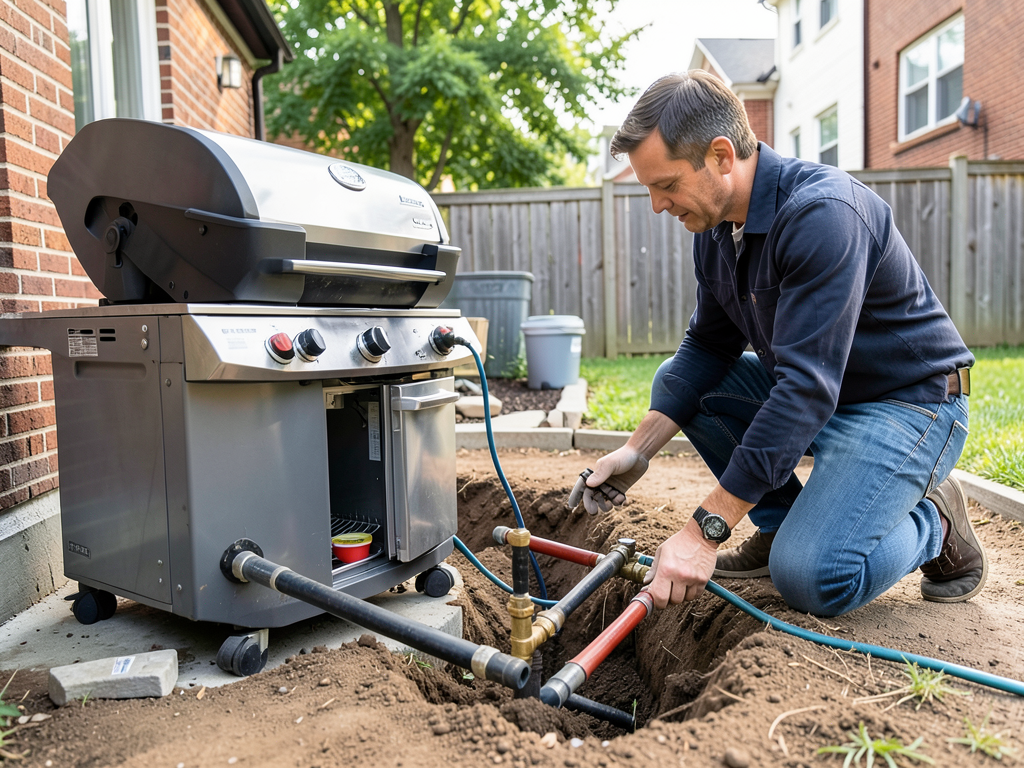
Plumbing Requirements for Adding an Outdoor Kitchen to Your Sauganash Backyard
Adding an outdoor kitchen to your Sauganash backyard transforms your home into an entertainment hub. The Chicago area’s climate and building codes create specific challenges that demand careful planning. You need proper gas lines for your grill and fire pit, reliable water supply for your sink and ice maker, and drainage systems that handle everything from summer storms to winter freezes.. Read more about Preventing Outdoor Spigot Bursts During a Cold Snap in Edgebrook.
Sauganash sits on Chicago’s North Side with its mix of historic bungalows and newer custom homes. The neighborhood’s mature trees and established properties mean your outdoor kitchen must integrate with existing utilities. You will need to navigate Chicago’s strict building codes, obtain proper permits, and ensure your installation can withstand temperatures that drop below zero in winter. Why River North Business Owners Trust Us for Rapid Commercial Plumbing Repairs.
Professional installation prevents costly mistakes. A licensed plumber understands Chicago’s frost line depth of 42 inches, knows which materials resist temperature swings, and ensures your gas lines meet BTU requirements for high-end appliances. This guide walks you through every plumbing consideration for your outdoor kitchen project.. Read more about How to Plan the Plumbing for a Kitchen Island in Your West Loop Loft.
Gas Line Installation for Outdoor Cooking Equipment
Your outdoor kitchen needs reliable gas service for grills, pizza ovens, and fire pits. Natural gas provides consistent heat without propane tank refills. A professional plumber calculates your total BTU requirements by adding up all appliance ratings. Most outdoor kitchens need 100,000 to 200,000 BTUs total.
Gas lines require black steel pipe or approved flexible connectors buried below the frost line. In Chicago, that means trenching at least 42 inches deep. The pipe must have proper shut-off valves at both the connection point and at each appliance. You need a pressure test to verify no leaks exist before covering the trench.
Gas line sizing depends on distance from your home’s main meter. Longer runs need larger diameter pipes to maintain pressure. A 50-foot run to a grill might need 1-inch pipe while a 10-foot run could use 3/4-inch. Your plumber determines exact sizing based on your appliance load and distance.
Safety features include automatic shut-off valves that stop gas flow if a line breaks. You must also install a sediment trap or drip leg near each appliance to catch debris. Chicago code requires all gas work to be inspected and permitted through the Department of Buildings. EPA Lead in Drinking Water Information.
Water Supply Lines for Outdoor Fixtures
Outdoor kitchens need both hot and cold water for sinks, ice makers, and beverage stations. You connect to your home’s existing plumbing through the basement or crawl space. The main water line enters your house at about 4 to 5 feet deep, so you can branch off before it goes deeper.
PEX piping works best for outdoor applications. It resists freezing better than copper and handles temperature swings without cracking. You need PEX-A grade for flexibility and UV resistance. Run supply lines inside protective conduit if they run above ground or near concrete.
Every outdoor fixture needs its own shut-off valve inside your home. This lets you drain the lines before winter without affecting indoor plumbing. Install a pressure-reducing valve if your home pressure exceeds 80 PSI. High pressure can cause outdoor fixtures to leak or spray erratically.
Hot water lines need insulation even in summer. Underground lines stay cool but exposed pipes can lose heat quickly. Use foam insulation sleeves on all hot water pipes. For sinks far from your water heater, consider a small tankless unit dedicated to the outdoor kitchen.
Drainage Solutions for Outdoor Sinks and Appliances
Outdoor sinks and dishwashers need proper drainage to prevent backups and code violations. You cannot simply run a drain hose into your yard. Chicago requires all wastewater to connect to the sanitary sewer system. This means tying into your home’s existing drain lines or installing a new dedicated line. Wicker Park Sewer Line Repair Specialists for Older Chicago Homes.
Gravity drainage works best when possible. Your outdoor kitchen should sit at a slightly higher elevation than your home’s main drain stack. This allows wastewater to flow downhill naturally. If elevation doesn’t allow gravity flow, you need a sewage ejector pump to lift the water to the proper level.
French drains handle rainwater runoff from your patio. These gravel-filled trenches with perforated pipes direct water away from your home’s foundation. Install them around your outdoor kitchen to prevent pooling near gas lines and electrical connections. Top Rated Plumbers for High Rise Condos in the Gold Coast.
Backflow prevention devices stop contaminated water from flowing back into your clean water supply. Chicago code requires RPZ (Reduced Pressure Zone) valves for outdoor plumbing connections. These valves have test ports that require annual inspection by a certified tester.
Winterization Strategies for Chicago’s Harsh Climate
Chicago winters can drop to -20°F with wind chills reaching -40°F. Your outdoor kitchen plumbing needs protection from freezing. Start with proper burial depth. All supply and drain lines must go below the 42-inch frost line. Use foam insulation on any exposed pipes or fixtures.
Install drain valves at the lowest points of your water lines. Before the first freeze, open these valves to remove all water from the system. Leave the valves open until spring. For fixtures you use year-round, install heat tape with thermostats that activate when temperatures drop below 40°F.
Outdoor faucets need freeze-proof sill cocks. These have long stems that keep the water connection inside your heated home. When you shut off the valve, the water drains from the exposed portion. Install these with a slight downward pitch to ensure complete drainage.
Gas lines rarely freeze but can develop condensation that turns to ice. Install drip legs at low points to collect moisture. For fire pits and heaters used in winter, use stainless steel flex connectors that resist cracking from temperature changes.
Chicago Building Codes and Permit Requirements
Chicago’s plumbing code exceeds national standards in several areas. You need permits for any gas line installation, new water service, or drainage modifications. The Department of Buildings requires three sets of plans showing existing and proposed utilities. A licensed plumber must pull these permits in their name.
Gas line permits require pressure testing documentation. Your plumber submits test results showing the system holds pressure without dropping. Water line permits need backflow preventer certification and cross-connection control documentation. Drain line permits require connection point verification with the sewer department.
Inspections happen at multiple stages. Rough-in inspections occur before covering trenches or walls. Final inspections verify all connections work properly. You cannot use your outdoor kitchen until you receive final approval. Failing inspection means removing finished work to fix problems.
Chicago also requires lead-free materials for all potable water lines. This means no lead solder on copper joints and PEX tubing that meets NSF/ANSI 61 standards. For homes built before 1986, you may need to replace lead service lines when adding new outdoor connections.
Material Selection for Durability and Performance
Material choice affects your outdoor kitchen’s longevity. For water supply lines, PEX-A offers the best freeze resistance and flexibility. Use 3/4-inch PEX for main runs and 1/2-inch for individual fixtures. For gas lines, black steel pipe meets code requirements while flexible CSST (Corrugated Stainless Steel Tubing) offers easier installation for tight spaces.
Drainage pipes need to handle temperature swings without becoming brittle. PVC works well for most applications but ABS handles cold better. Use Schedule 40 PVC for underground drains and Schedule 80 for exposed runs. Connect with proper primer and cement for watertight joints.
Valves and fittings should be brass or stainless steel rather than cheap plastic. Outdoor conditions cause plastic to become brittle and crack. Look for valves rated for outdoor use with UV protection. Gate valves work better than ball valves for main shut-offs because they fully open the pipe diameter.
Insulation matters as much as pipe material. Use closed-cell foam insulation that resists moisture absorption. For extreme cold areas, consider heat-trace cable with built-in thermostats. This applies gentle heat to prevent freezing without wasting energy.
Integration with Existing Sauganash Home Systems
Sauganash homes often have mature landscaping and established utility runs. Your outdoor kitchen must work around existing trees, sprinkler systems, and buried cables. A professional locates all utilities before trenching using ground-penetrating radar and calling JULIE (Joint Utility Locating Information for Excavators).
Older Sauganash homes may have clay sewer pipes that crack easily. Your plumber must identify the main sewer connection point and assess its condition. If the clay pipe shows damage, you may need to replace a section before connecting your new drainage.
Water pressure varies across Sauganash based on elevation and distance from water mains. Homes near Bryn Mawr Country Club often have higher pressure than those near the forest preserve. Your plumber tests existing pressure and may need to install a pressure regulator for consistent outdoor flow.
Electrical integration goes hand-in-hand with plumbing. Your outdoor kitchen needs GFCI-protected outlets for appliances and lighting. These must be installed by a licensed electrician and coordinated with your plumbing rough-in to avoid conflicts in wall cavities or underground.
Cost Factors and Timeline Considerations
Outdoor kitchen plumbing costs depend on distance from your home, soil conditions, and permit requirements. A basic setup with a sink and gas grill might cost $3,000 to $5,000. Adding features like a dishwasher, ice maker, or multiple gas appliances can push costs to $8,000 or more.
Soil conditions affect excavation costs. Sauganash has mostly clay soil that’s heavy when wet but stable once excavated. Rocky soil or areas with tree roots increase labor time. Your plumber should provide a soil assessment before giving a final quote.
Permit fees vary by project scope. A simple gas line permit might cost $150 while a complete outdoor kitchen package with water, gas, and drainage could cost $500 or more. These fees go directly to the city, not your contractor. City of Chicago Plumbing Permits.
Project timeline typically spans 2 to 4 weeks. Week one involves design review and permit acquisition. Week two covers trenching and rough-in work. Week three includes inspections and finish connections. Week four allows for final inspection and any adjustments needed.
Maintenance and Troubleshooting Tips
Regular maintenance prevents outdoor kitchen plumbing problems. Check gas connections annually with soapy water to detect leaks. Bubbles indicate escaping gas that needs immediate attention. Clean faucet aerators every spring to remove sediment that builds up during winter dormancy.
Inspect drain lines twice yearly for clogs. Pour water through each fixture and watch for slow drainage. Address slow drains immediately before they become complete blockages. Use enzyme-based cleaners rather than harsh chemicals that can damage pipes.
Before winter, perform your annual shutdown procedure. Turn off indoor shut-off valves, open outdoor fixtures to drain remaining water, and leave them open until spring. For year-round fixtures, verify heat tape operation and check insulation integrity.
Know the signs of gas line problems. Hissing sounds, rotten egg odors, or dead vegetation near buried lines indicate potential leaks. If you suspect a gas leak, evacuate the area and call your gas company immediately. Do not operate electrical switches or create any sparks.
Choosing the Right Plumbing Professional
Not all plumbers handle outdoor kitchen installations. Look for contractors with specific experience in outdoor projects and knowledge of Chicago codes. Ask to see examples of previous outdoor kitchens they’ve completed. Verify their Illinois plumbing license and insurance coverage. 24 Hour Emergency Plumbers in Lincoln Park for Immediate Help.
A qualified outdoor kitchen plumber should provide detailed plans showing pipe routing, valve locations, and connection points. They should explain their winterization strategy and demonstrate understanding of your specific Sauganash property conditions. Request references from recent outdoor kitchen clients.
Communication matters throughout the project. Your plumber should keep you informed about permit status, inspection scheduling, and any issues discovered during excavation. They should also coordinate with your general contractor or landscape designer to ensure proper integration.
Price shouldn’t be your only consideration. The cheapest bid often cuts corners on materials or skips important steps like pressure testing. A thorough, code-compliant installation prevents expensive repairs and ensures your outdoor kitchen functions safely for years to come.
Frequently Asked Questions
How deep do outdoor kitchen water lines need to be in Chicago?
Chicago requires all underground water lines to be buried below the frost line, which is 42 inches deep. This prevents freezing during winter months. Your plumber may need to go deeper in areas with poor soil drainage or near large trees.
Can I install my own outdoor kitchen plumbing to save money?
Chicago code requires licensed plumbers to handle gas lines, water service connections, and drainage modifications. DIY plumbing work is illegal and can result in fines, failed inspections, and safety hazards. You can help with demolition or finish work, but let professionals handle the technical installations.
How long does it take to get permits for outdoor kitchen plumbing?
Permit processing typically takes 2 to 3 weeks in Chicago. Simple gas line permits process faster than complete outdoor kitchen packages with multiple utilities. Your plumber should submit complete plans with all required documentation to avoid delays.
What happens if my outdoor kitchen plumbing fails inspection?
If your installation fails inspection, you must correct the problems before proceeding. This might mean exposing buried pipes, replacing non-compliant materials, or adjusting pipe slopes. Your plumber should guarantee their work will pass inspection or they’ll make necessary corrections at no additional cost.
Do I need special insurance for outdoor kitchen plumbing?
Your plumber should carry liability insurance that covers underground work and potential damage to your property. Ask for proof of insurance before work begins. Your homeowner’s insurance may require notification of major outdoor improvements, especially those involving gas lines.
- Assess Your Needs
Determine which appliances need gas, water, and drainage. List everything you want to include like grills, sinks, refrigerators, and ice makers.
- Check Existing Utilities
Locate your home’s main water line, gas meter, and sewer connection. Measure distances from your proposed outdoor kitchen location to these points.
- Design the Layout
Plan where each fixture will go, keeping in mind drainage slopes and gas line routing. Consider proximity to your indoor kitchen for convenience.
- Hire a Licensed Plumber
Choose a plumber with outdoor kitchen experience and knowledge of Chicago codes. Get a detailed proposal showing materials, timeline, and permit requirements.
- Obtain Permits
Let your plumber pull all required permits before starting work. This ensures your installation meets code and passes inspection.
- Schedule Inspections
Plan for rough-in and final inspections at the appropriate stages. Don’t cover any work until it passes inspection.
- Complete Winterization
Install proper shut-off valves and drainage systems. Test all winterization features before your first freeze.
You may also find this helpful. Why Your Backyard is Always Soggy — Yard Drainage Solutions for Forest Glen Homes.
{
“@context”: “https://schema.org”,
“@type”: “BlogPosting”,
“headline”: “Plumbing Requirements for Adding an Outdoor Kitchen to Your Sauganash Backyard”,
“description”: “Complete guide to outdoor kitchen plumbing installation in Sauganash, Chicago. Learn about gas lines, drainage, permits, and winterization for your backyard project.”,
“wordCount”: 2438,
“datePublished”: “2026-04-13T11:00:00.000Z”,
“dateModified”: “2026-04-13T11:00:00.000Z”,
“inLanguage”: “en-US”,
“mainEntityOfPage”: {
“@type”: “WebPage”,
“@id”: “https://aplusplumbingchicago.com”
},
“publisher”: {
“@type”: “LocalBusiness”,
“name”: “A Plus Plumbing Chicago”,
“url”: “https://aplusplumbingchicago.com”
},
“author”: {
“@type”: “Organization”,
“name”: “A Plus Plumbing Chicago”,
“url”: “https://aplusplumbingchicago.com”
},
“image”: {
“@type”: “ImageObject”,
“url”: “https://aplusplumbingchicago.com/wp-content/uploads/2026/03/plumbing-requirements-for-adding-an-outdoor-kitche-1.png”
}
}
{
“@context”: “https://schema.org”,
“@type”: “Plumber”,
“name”: “A Plus Plumbing Chicago”,
“url”: “https://aplusplumbingchicago.com”,
“address”: {
“@type”: “PostalAddress”,
“addressLocality”: “Chicago”
},
“areaServed”: {
“@type”: “City”,
“name”: “Chicago”
}
}
{
“@context”: “https://schema.org”,
“@type”: “FAQPage”,
“mainEntity”: [
{
“@type”: “Question”,
“name”: “How deep do outdoor kitchen water lines need to be in Chicago?”,
“acceptedAnswer”: {
“@type”: “Answer”,
“text”: “Chicago requires all underground water lines to be buried below the frost line, which is 42 inches deep. This prevents freezing during winter months. Your plumber may need to go deeper in areas with poor soil drainage or near large trees.”
}
},
{
“@type”: “Question”,
“name”: “Can I install my own outdoor kitchen plumbing to save money?”,
“acceptedAnswer”: {
“@type”: “Answer”,
“text”: “Chicago code requires licensed plumbers to handle gas lines, water service connections, and drainage modifications. DIY plumbing work is illegal and can result in fines, failed inspections, and safety hazards. You can help with demolition or finish work, but let professionals handle the technical installations.”
}
},
{
“@type”: “Question”,
“name”: “How long does it take to get permits for outdoor kitchen plumbing?”,
“acceptedAnswer”: {
“@type”: “Answer”,
“text”: “Permit processing typically takes 2 to 3 weeks in Chicago. Simple gas line permits process faster than complete outdoor kitchen packages with multiple utilities. Your plumber should submit complete plans with all required documentation to avoid delays.”
}
},
{
“@type”: “Question”,
“name”: “What happens if my outdoor kitchen plumbing fails inspection?”,
“acceptedAnswer”: {
“@type”: “Answer”,
“text”: “If your installation fails inspection, you must correct the problems before proceeding. This might mean exposing buried pipes, replacing non-compliant materials, or adjusting pipe slopes. Your plumber should guarantee their work will pass inspection or they’ll make necessary corrections at no additional cost.”
}
},
{
“@type”: “Question”,
“name”: “Do I need special insurance for outdoor kitchen plumbing?”,
“acceptedAnswer”: {
“@type”: “Answer”,
“text”: “Your plumber should carry liability insurance that covers underground work and potential damage to your property. Ask for proof of insurance before work begins. Your homeowner’s insurance may require notification of major outdoor improvements, especially those involving gas lines.”
}
}
]
}
{
“@context”: “https://schema.org”,
“@type”: “HowTo”,
“name”: “How to Plan Your Outdoor Kitchen Plumbing”,
“step”: [
{
“@type”: “HowToStep”,
“position”: 1,
“name”: “Assess Your Needs”,
“text”: “Determine which appliances need gas, water, and drainage. List everything you want to include like grills, sinks, refrigerators, and ice makers.”
},
{
“@type”: “HowToStep”,
“position”: 2,
“name”: “Check Existing Utilities”,
“text”: “Locate your home’s main water line, gas meter, and sewer connection. Measure distances from your proposed outdoor kitchen location to these points.”
},
{
“@type”: “HowToStep”,
“position”: 3,
“name”: “Design the Layout”,
“text”: “Plan where each fixture will go, keeping in mind drainage slopes and gas line routing. Consider proximity to your indoor kitchen for convenience.”
},
{
“@type”: “HowToStep”,
“position”: 4,
“name”: “Hire a Licensed Plumber”,
“text”: “Choose a plumber with outdoor kitchen experience and knowledge of Chicago codes. Get a detailed proposal showing materials, timeline, and permit requirements.”
},
{
“@type”: “HowToStep”,
“position”: 5,
“name”: “Obtain Permits”,
“text”: “Let your plumber pull all required permits before starting work. This ensures your installation meets code and passes inspection.”
},
{
“@type”: “HowToStep”,
“position”: 6,
“name”: “Schedule Inspections”,
“text”: “Plan for rough-in and final inspections at the appropriate stages. Don’t cover any work until it passes inspection.”
},
{
“@type”: “HowToStep”,
“position”: 7,
“name”: “Complete Winterization”,
“text”: “Install proper shut-off valves and drainage systems. Test all winterization features before your first freeze.”
}
],
“image”: “https://aplusplumbingchicago.com/wp-content/uploads/2026/03/plumbing-requirements-for-adding-an-outdoor-kitche-1.png”
}
{
“@context”: “https://schema.org”,
“@type”: “BreadcrumbList”,
“itemListElement”: [
{
“@type”: “ListItem”,
“position”: 1,
“name”: “Home”,
“item”: “https://aplusplumbingchicago.com”
},
{
“@type”: “ListItem”,
“position”: 2,
“name”: “Blog”,
“item”: “https://aplusplumbingchicago.com/blog”
},
{
“@type”: “ListItem”,
“position”: 3,
“name”: “Plumbing Requirements for Adding an Outdoor Kitchen to Your Sauganash Backyard”
}
]
}
{
“@context”: “https://schema.org”,
“@type”: “Service”,
“serviceType”: “Plumbing”,
“provider”: {
“@type”: “LocalBusiness”,
“name”: “A Plus Plumbing Chicago”,
“url”: “https://aplusplumbingchicago.com”
},
“areaServed”: {
“@type”: “City”,
“name”: “Chicago”
},
“description”: “Complete guide to outdoor kitchen plumbing installation in Sauganash, Chicago. Learn about gas lines, drainage, permits, and winterization for your backyard project.”
}