
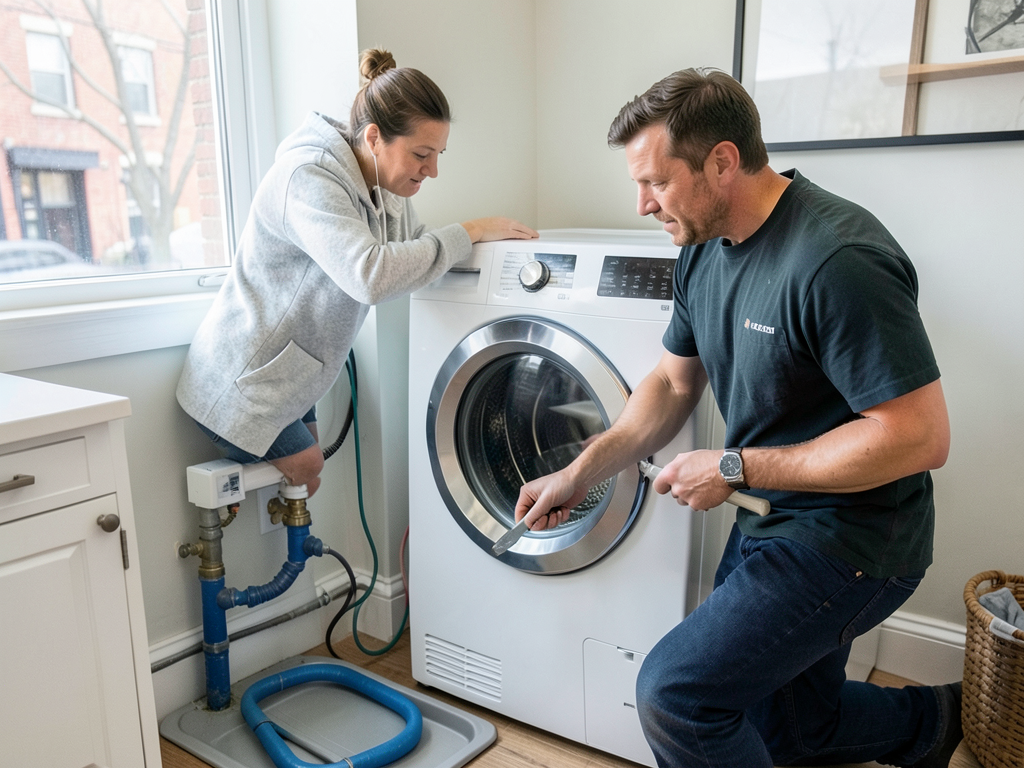
Why Moving Laundry Upstairs in Chicago Homes Requires Special Planning
Chicago homeowners often dream of moving their laundry room from the damp basement to a more convenient second-floor location. The idea makes perfect sense for families in Lincoln Park bungalows or Lakeview two-flats where hauling laundry up and down stairs becomes a daily chore. However, the plumbing challenges of an upstairs laundry installation go far beyond simply running new pipes. Chicago’s unique building codes, extreme weather patterns, and the structural demands of heavy water-filled appliances create a complex project that requires careful planning before you pick up a wrench.. Read more about Identifying Common Plumbing Issues in Renovated Kenwood Greystones.
The stakes are high when you move water-using appliances upstairs. A single burst hose or failed connection can send hundreds of gallons cascading through your home before you even notice the problem. That’s why understanding the specific requirements for Chicago’s Title 14P Plumbing Code and implementing proper safety systems becomes critical. This guide walks you through everything you need to know before moving your laundry room upstairs in Chicago.
Core Plumbing Requirements for Upstairs Laundry Installations
Moving laundry upstairs means creating an entirely new plumbing system that must handle both water supply and waste removal efficiently. The basic components include hot and cold water supply lines, a properly sized drain system, and adequate venting to prevent sewer gas from entering your home. Each of these elements must meet specific code requirements to pass inspection and function safely. Wicker Park Sewer Line Repair Specialists for Older Chicago Homes.
Supply lines for laundry machines typically need ½-inch hot and cold water pipes. These connect to standard washing machine hoses, but the shut-off valves must be easily accessible for quick emergency response. The drain system requires more careful attention. Chicago code mandates a minimum 2-inch diameter standpipe for washing machine drains. This standpipe must extend 18 to 30 inches above the trap weir to prevent overflow while allowing proper drainage. 24 Hour Emergency Plumbers in Lincoln Park for Immediate Help.
Venting presents another critical consideration. Without proper venting, your washing machine will struggle to drain, and worse, sewer gases can back up into your home. The vent pipe must connect to the home’s main vent stack or extend through the roof. In Chicago’s older housing stock, especially in areas like Logan Square and Wicker Park, finding space to run new vent pipes through existing walls can be challenging and may require creative routing solutions.. Read more about What to Do When Your Washing Machine Drain Overflows Every Time You Do Laundry.
Navigating Chicago’s Title 14P Plumbing Code
Chicago’s plumbing code differs significantly from national standards. The City of Chicago Title 14P code has specific requirements that may surprise homeowners familiar with plumbing projects in other cities. One major difference involves material restrictions. While many areas allow PEX piping for water supply lines, Chicago has historically limited PEX use in certain applications, though recent code updates have expanded its acceptance in residential settings. City of Chicago Department of Buildings Plumbing Information.
The code also mandates specific requirements for drain line slopes. Horizontal drain pipes must maintain a minimum slope of ¼ inch per foot to ensure proper waste flow. In second-floor installations, achieving this slope often means creative routing through walls and ceilings. The code also requires cleanouts at specific intervals to allow for future maintenance and clog removal.
Chicago’s strict inspection requirements mean your upstairs laundry project will need permits from the Department of Buildings. The inspection process verifies that all work meets code requirements, including proper pipe sizing, adequate venting, and correct installation of safety features. Skipping permits might seem tempting but can lead to costly rework if discovered during future renovations or when selling your home.
Essential Leak Prevention and Safety Features
The most critical aspect of upstairs laundry installation is preventing water damage. A single failed hose can release 600 gallons of water per hour, causing catastrophic damage to floors, ceilings, and personal belongings below. Chicago’s building code recognizes this risk and mandates specific safety features for second-floor laundry installations.
Every upstairs laundry area must include a secondary drain pan under the washing machine. This pan should be at least 1.5 inches deep and extend at least 3 inches beyond the machine on all sides. The pan must connect to a separate drain line that leads to a safe discharge point, such as a utility sink or exterior wall. This secondary system provides backup protection if the primary drain fails.
Automatic shut-off valves represent another essential safety feature. These devices monitor water flow and automatically shut off the supply if they detect abnormal patterns that might indicate a burst hose or leak. Modern smart valves can even send alerts to your phone when problems occur. While these systems add to the initial cost, they provide invaluable peace of mind and can prevent thousands of dollars in damage.. Read more about Smart Leak Detectors That Can Save Your Lincoln Square Home from Catastrophic Water Damage.
Water hammer arrestors are also required by code to prevent the banging and vibration that occurs when washing machine valves close rapidly. These devices absorb the shock wave created by sudden water flow changes, protecting your pipes from damage and reducing noise. Without them, you’ll hear loud banging every time your washing machine cycles, and over time, this can cause pipe joints to fail.
Structural Considerations for Heavy Appliances
A washing machine filled with water and clothes can weigh over 200 pounds. When spinning at high speeds, it creates significant vibration and lateral forces that can stress floor joists and wall connections. Chicago’s older housing stock, particularly in neighborhoods like Bucktown and West Loop, often features floor joists spaced 24 inches apart rather than the modern standard of 16 inches. This spacing may not provide adequate support for heavy appliances without reinforcement.
Before installing an upstairs laundry, have a structural engineer evaluate your floor system. They may recommend adding support posts, sistering joists, or installing additional blocking between existing joists. The cost of this reinforcement varies significantly based on your home’s construction, but it’s essential for preventing long-term damage and ensuring your floor can handle the load.
Floor leveling is another critical consideration. Washing machines require perfectly level installation to function properly and minimize vibration. Older Chicago homes often have floors that have settled over decades, creating slopes that can cause washing machines to walk across the room during spin cycles. Self-leveling compounds or adjustable mounting feet can address minor leveling issues, but severe slopes may require more extensive floor repairs.
Cost Factors and Permit Requirements
The total cost of moving a laundry room upstairs varies widely based on your home’s existing plumbing layout and construction type. In Chicago, homeowners typically spend between $3,000 and $8,000 for a basic upstairs laundry installation that includes new supply lines, drain installation, and basic safety features. However, costs can exceed $15,000 if extensive structural work or complex routing is required.
Permit costs from the City of Chicago Department of Buildings typically range from $100 to $500, depending on the project scope. The permit process involves submitting detailed plumbing plans that show the proposed changes, including pipe routing, fixture locations, and safety system installations. A licensed plumber must sign these plans, and the city requires inspections at various stages of the project.
Timeframes also vary significantly. A straightforward installation in a modern home might take 2-3 days, while a complex project in a vintage Chicago building could take 1-2 weeks. Weather can impact schedules, particularly during Chicago’s harsh winters when outdoor work becomes challenging. Planning your project during milder months can help avoid weather-related delays.
Comparing Laundry Room Installation Options
| Installation Type | Typical Cost Range | Timeline | Complexity Level |
|---|---|---|---|
| Basic Upstairs Install | $3,000 – $5,000 | 2-3 days | Low |
| Complex Routing Required | $5,000 – $8,000 | 3-5 days | Medium |
| Structural Reinforcement Needed | $8,000 – $12,000 | 1-2 weeks | High |
| Vintage Building Challenges | $10,000 – $15,000+ | 2-3 weeks | Very High |
Essential Safety Checklist for Upstairs Laundry
- Secondary drain pan with proper drainage connection
- Automatic shut-off valves on both hot and cold supply lines
- Water hammer arrestors installed on both supply lines
- Minimum 2-inch diameter standpipe for washing machine drain
- Proper venting to prevent sewer gas backup
- Floor leveling and structural evaluation completed
- City of Chicago plumbing permit obtained
- Accessible shut-off valves for emergency use
- Leak detection system or water alarm installed
- Proper electrical outlet with GFCI protection
Frequently Asked Questions
Can I install a laundry room upstairs in my Chicago bungalow?
Yes, but older bungalows often require structural reinforcement and creative plumbing routing. The floor joists in many Chicago bungalows were designed for lighter loads than modern appliances create. A structural evaluation is essential before proceeding with installation.
Do I really need permits for an upstairs laundry installation?
Yes. Chicago requires permits for any new plumbing installation, including moving laundry upstairs. The permit process ensures your installation meets code requirements and includes necessary safety features. Work without permits can result in fines and may void your homeowner’s insurance if water damage occurs.
How can I prevent my washing machine from vibrating through the floor?
Proper installation on a level surface is crucial. Use vibration-dampening pads under the machine’s feet, and ensure the floor can support the weight without excessive movement. In some cases, adding a plywood subfloor layer can help distribute the weight more evenly.
Making Your Upstairs Laundry Dream a Reality
Moving your laundry room upstairs in Chicago can dramatically improve your daily routine and home functionality. However, success requires understanding and addressing the unique plumbing, structural, and code requirements that come with second-floor installations. The key is working with experienced professionals who understand Chicago’s specific requirements and can guide you through the permitting process.
Before starting your project, get a comprehensive evaluation of your home’s current plumbing layout, structural capacity, and code compliance requirements. This assessment will help you understand the true scope and cost of your project while identifying potential challenges early in the planning process.
Ready to transform your laundry routine with an upstairs installation? Contact A Plus Plumbing Chicago at (773) 514-5111 for a professional evaluation of your home’s suitability for an upstairs laundry room. Our experienced team understands Chicago’s unique building challenges and can help you navigate the permitting process while ensuring your installation meets all safety and code requirements. Don’t risk water damage or code violations – let our experts help you create the convenient laundry space you’ve been dreaming about. For more information, visit International Association of Plumbing and Mechanical Officials.
You may also find this helpful. Why Your University Village Condo Needs a Whole House Water Shut Off Valve.
{
“@context”: “https://schema.org”,
“@type”: “BlogPosting”,
“headline”: “Moving Your Laundry Room to the Second Floor Without Ruining Your Plumbing”,
“description”: “Planning an upstairs laundry room in Chicago? Learn the critical plumbing code requirements, leak prevention systems, and structural considerations before you start.”,
“wordCount”: 1713,
“datePublished”: “2026-04-12T11:52:00.000Z”,
“dateModified”: “2026-04-12T11:52:00.000Z”,
“inLanguage”: “en-US”,
“mainEntityOfPage”: {
“@type”: “WebPage”,
“@id”: “https://aplusplumbingchicago.com”
},
“publisher”: {
“@type”: “LocalBusiness”,
“name”: “A Plus Plumbing Chicago”,
“url”: “https://aplusplumbingchicago.com”
},
“author”: {
“@type”: “Organization”,
“name”: “A Plus Plumbing Chicago”,
“url”: “https://aplusplumbingchicago.com”
},
“image”: {
“@type”: “ImageObject”,
“url”: “https://aplusplumbingchicago.com/wp-content/uploads/2026/03/moving-your-laundry-room-to-the-second-floor-witho-1.png”
}
}
{
“@context”: “https://schema.org”,
“@type”: “Plumber”,
“name”: “A Plus Plumbing Chicago”,
“url”: “https://aplusplumbingchicago.com”,
“address”: {
“@type”: “PostalAddress”,
“addressLocality”: “Chicago”
},
“areaServed”: {
“@type”: “City”,
“name”: “Chicago”
}
}
{
“@context”: “https://schema.org”,
“@type”: “FAQPage”,
“mainEntity”: [
{
“@type”: “Question”,
“name”: “Can I install a laundry room upstairs in my Chicago bungalow?”,
“acceptedAnswer”: {
“@type”: “Answer”,
“text”: “Yes, but older bungalows often require structural reinforcement and creative plumbing routing. The floor joists in many Chicago bungalows were designed for lighter loads than modern appliances create. A structural evaluation is essential before proceeding with installation.”
}
},
{
“@type”: “Question”,
“name”: “Do I really need permits for an upstairs laundry installation?”,
“acceptedAnswer”: {
“@type”: “Answer”,
“text”: “Yes. Chicago requires permits for any new plumbing installation, including moving laundry upstairs. The permit process ensures your installation meets code requirements and includes necessary safety features. Work without permits can result in fines and may void your homeowner’s insurance if water damage occurs.”
}
},
{
“@type”: “Question”,
“name”: “How can I prevent my washing machine from vibrating through the floor?”,
“acceptedAnswer”: {
“@type”: “Answer”,
“text”: “Proper installation on a level surface is crucial. Use vibration-dampening pads under the machine’s feet, and ensure the floor can support the weight without excessive movement. In some cases, adding a plywood subfloor layer can help distribute the weight more evenly.”
}
}
]
}
{
“@context”: “https://schema.org”,
“@type”: “BreadcrumbList”,
“itemListElement”: [
{
“@type”: “ListItem”,
“position”: 1,
“name”: “Home”,
“item”: “https://aplusplumbingchicago.com”
},
{
“@type”: “ListItem”,
“position”: 2,
“name”: “Blog”,
“item”: “https://aplusplumbingchicago.com/blog”
},
{
“@type”: “ListItem”,
“position”: 3,
“name”: “Moving Your Laundry Room to the Second Floor Without Ruining Your Plumbing”
}
]
}
{
“@context”: “https://schema.org”,
“@type”: “Service”,
“serviceType”: “Plumbing”,
“provider”: {
“@type”: “LocalBusiness”,
“name”: “A Plus Plumbing Chicago”,
“url”: “https://aplusplumbingchicago.com”
},
“areaServed”: {
“@type”: “City”,
“name”: “Chicago”
},
“description”: “Planning an upstairs laundry room in Chicago? Learn the critical plumbing code requirements, leak prevention systems, and structural considerations before you start.”
}