
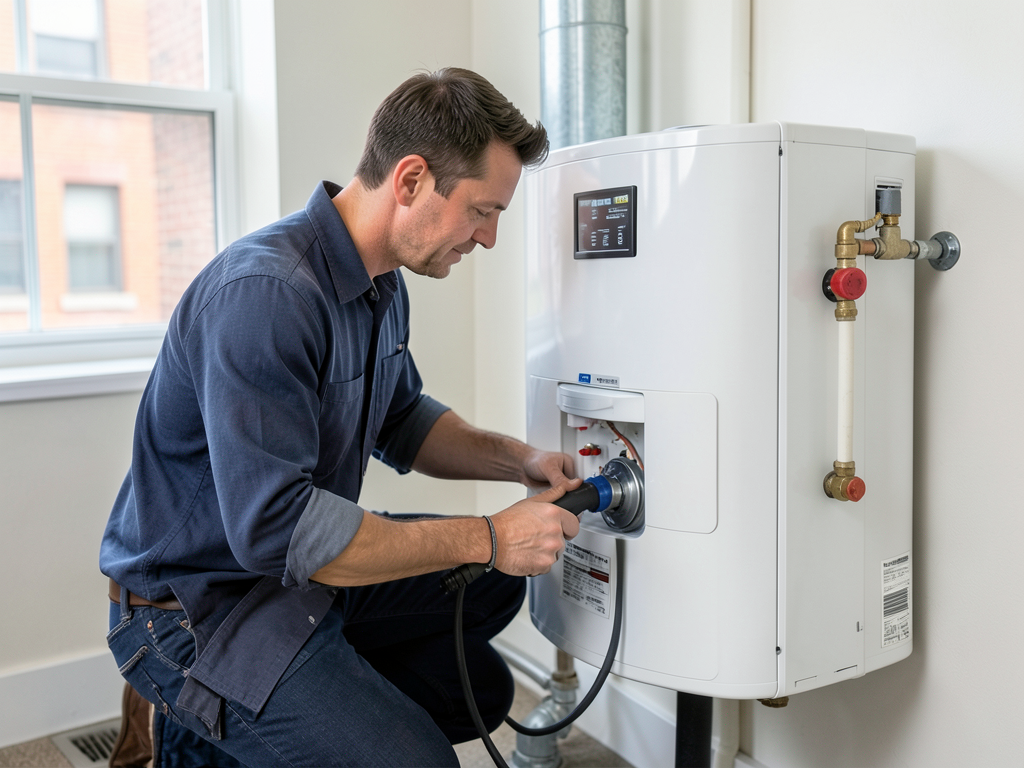
Your tankless water heater needs a professional flush every year in Chicago homes. This isn’t just a suggestion from manufacturers – it’s a requirement backed by the specific challenges our city’s water quality and climate create for these systems.
Chicago’s Lake Michigan water contains minerals that form scale inside your tankless unit. When cold water passes through the heat exchanger, calcium and magnesium particles stick to the metal surfaces. Over time, this buildup acts like insulation, forcing your system to work harder and reducing hot water flow.
Without regular maintenance, you’ll notice longer wait times for hot water, fluctuating temperatures during showers, and eventually complete system failure. The cost of replacing a heat exchanger far exceeds the price of annual maintenance.
How Chicago’s Water Quality Affects Your Tankless System
Lake Michigan water enters Chicago homes with approximately 8-12 grains per gallon of hardness. This places our water in the “hard” to “very hard” category on the water quality scale. For comparison, areas with soft water like Portland, Oregon measure around 1-2 grains per gallon.
The mineral content varies slightly by neighborhood. Homes in Lincoln Park and Lakeview receive similar water quality from the city’s treatment plants. However, older buildings with galvanized pipes may experience additional mineral buildup from the distribution system itself.
Chicago’s seasonal temperature swings compound the problem. When your tankless unit works overtime during winter months to heat freezing cold water, mineral deposits form faster. The constant expansion and contraction of pipes and components creates micro-fractures where scale can accumulate.
Warning Signs Your Tankless Water Heater Needs Service
Several indicators suggest your system requires immediate attention. Error codes like 11, 12, or 19 on the digital display point to specific problems. Code 11 indicates no ignition, while code 12 signals a flame loss. These issues often stem from scale buildup affecting the burner or sensors.
Physical symptoms include the “cold water sandwich” effect – when hot water flow starts, stops, then restarts during use. This happens when scale restricts water flow through the heat exchanger. You might also hear popping or cracking sounds as water trapped in scale deposits turns to steam.
Reduced flow rates indicate serious problems. If your showerhead delivers only half the previous water pressure, mineral deposits have likely clogged the internal pathways. This not only affects comfort but can damage the unit’s flow sensors.
What Professional Tankless Maintenance Includes
A complete service visit addresses every component that affects performance. The process begins with testing water pressure and checking for error codes. Technicians then isolate the unit using shut-off valves before connecting flushing equipment.
The heat exchanger receives a thorough descaling treatment using food-grade citric acid or commercial descaling solution. This dissolves mineral deposits without damaging the copper or stainless steel components. The solution circulates through the system for 30-45 minutes, depending on buildup severity.
Air intake and exhaust vents require inspection for blockages from debris, bird nests, or ice formation during winter. The condensate drain trap needs cleaning to prevent acidic water from backing up into the unit. Burner assemblies get cleaned and adjusted for proper gas combustion.
Finally, technicians check the igniter, flame rod, and gas pressure. They verify temperature settings and test all safety features. This comprehensive approach ensures every system operates at peak efficiency. Site Settings.
DIY vs Professional Descaling: What You Need to Know
Many homeowners attempt DIY maintenance to save money. While basic filter cleaning is possible, complete descaling requires specialized equipment and knowledge of your specific unit’s requirements.
Professional service includes proper isolation valves, submersible pumps, and the correct concentration of descaling solution. Technicians understand how different brands like Navien, Rinnai, and Rheem require specific procedures. They also carry replacement parts and can spot developing problems before they cause failures.
The table below compares DIY and professional approaches:
| Aspect | DIY Maintenance | Professional Service |
|---|---|---|
| Equipment Needed | Basic tools, garden hose | Isolation valves, submersible pump, descaling solution |
| Time Required | 2-3 hours | 1-2 hours |
| Risk Level | High – can damage unit | Low – proper procedures followed |
| Warranty Impact | May void warranty | Maintains warranty compliance |
| Cost Range | $50-100 in supplies | $150-300 service call |
Chicago’s Winter Impact on Tankless Water Heaters
Chicago winters create unique challenges for tankless systems. When temperatures drop below freezing, your unit works significantly harder to heat water that enters at near-freezing temperatures. This increased workload accelerates scale formation and component wear.
Condensate lines face particular risks. The acidic water produced during combustion can freeze in exposed pipes, backing up into the unit and triggering safety shutdowns. Proper insulation and heat tracing become essential for preventing these freeze-ups.
Power outages during winter storms pose another threat. When electricity returns, tankless units experience power surges that can damage electronic controls. Installing surge protection specifically designed for tankless water heaters prevents these failures.
Ventilation becomes critical in winter. Snow and ice can block exhaust vents, causing dangerous carbon monoxide buildup. Regular inspection of vent terminations ensures proper airflow year-round.
Manufacturer Warranty Requirements
Most tankless water heater manufacturers require annual professional maintenance to maintain warranty coverage. Navien, Rinnai, and Rheem all specify professional service intervals in their warranty terms.
Skipping maintenance can void warranties worth thousands of dollars. If your heat exchanger fails due to scale buildup after years of neglect, you’ll pay the full replacement cost – typically $800 to $1,500 for parts alone.
Professional service providers document all maintenance work, creating a paper trail that proves compliance with warranty requirements. This documentation becomes crucial if you need to file a warranty claim.
Some manufacturers offer extended warranties for customers who maintain regular service schedules. These extended terms can add 3-5 years to your coverage period, providing additional protection against unexpected failures.
Factors That Increase Maintenance Frequency
Certain conditions require more frequent service than the standard annual schedule. Large households using high volumes of hot water need service every 6-8 months. The constant flow through the system accelerates scale formation.
Very hard water areas, particularly homes using well water or those with older galvanized pipes, benefit from 6-month service intervals. Water testing can determine exact hardness levels and help establish the right maintenance schedule.
High-temperature settings increase scale formation rates. If you keep your tankless unit set above 120°F, consider semi-annual maintenance. The higher the temperature, the faster minerals precipitate out of solution.
Commercial applications like restaurants or salons often require quarterly service due to constant hot water demand and the presence of grease or chemicals in the water supply.
Cost Factors for Tankless Maintenance
Service costs vary based on several factors. Basic maintenance starts around $150 for standard residential units. Complex installations with difficult access or older units requiring extensive cleaning can cost $300 or more.
Emergency service calls during winter months typically carry premium rates. Scheduling maintenance during off-peak seasons can reduce costs by 15-20%. Many companies offer annual service contracts that provide discounted rates for regular customers. 24 Hour Emergency Plumbers in Lincoln Park for Immediate Help.
Additional repairs discovered during maintenance add to the final cost. Replacing a faulty igniter might cost $200, while heat exchanger replacement runs $800-1,500. However, catching these issues early during routine service prevents more expensive emergency repairs. EPA Water Heater Efficiency Guide.
Finding Qualified Tankless Service Technicians
Not all plumbers have experience with tankless water heater maintenance. Look for technicians specifically trained on your brand of equipment. Navien and Rinnai both offer certification programs for service professionals. Top Rated Plumbers for High Rise Condos in the Gold Coast.
Verify licensing and insurance before scheduling service. Chicago requires all plumbers to hold valid state licenses. Ask about experience with your specific model and request references from other tankless owners.
Professional service should include a written report detailing all work performed and any recommendations for future maintenance. This documentation proves valuable for warranty claims and helps track your system’s performance over time.
Seasonal Maintenance Calendar for Chicago Homes
Timing your maintenance visits strategically improves system performance. Spring service prepares your unit for the heavy summer usage season. Technicians can address any winter damage and optimize settings for warmer incoming water temperatures.
Fall maintenance focuses on winter preparation. This includes checking freeze protection features, verifying vent clearances, and ensuring all safety systems function properly. For Chicago’s harsh winters, this timing proves crucial.
Between professional visits, monitor your system for changes in performance. Sudden drops in hot water temperature or flow rate indicate developing problems that need immediate attention.
Environmental Benefits of Regular Maintenance
Well-maintained tankless water heaters operate more efficiently, reducing energy consumption. Scale buildup forces units to burn more gas or use more electricity to achieve the same water temperature. This increased energy use directly impacts your utility bills and carbon footprint.
Efficient operation also extends equipment life, reducing the environmental impact of manufacturing replacement units. A tankless water heater that lasts 15-20 years instead of 8-10 years means fewer units in landfills and less manufacturing waste.
Proper maintenance prevents leaks that waste water. Even small drips from pressure relief valves or connections add up to thousands of gallons annually. Regular service identifies and fixes these issues before they become major problems.
Frequently Asked Questions
How long does a tankless water heater flush take?
Professional descaling typically requires 60-90 minutes. This includes system testing, isolation, descaling solution circulation, and final testing. DIY attempts often take 2-3 hours due to learning curve and lack of proper equipment.
Can I use vinegar instead of commercial descaling solution?
While vinegar works for light scale, it’s less effective than commercial solutions for heavy buildup. Vinegar also requires longer circulation times and may not dissolve all mineral deposits. Professional descalers use food-grade citric acid or specialized formulas designed for specific water conditions.
What happens if I skip maintenance for several years?
Scale buildup eventually blocks water flow completely, causing system failure. The heat exchanger becomes so clogged that the unit can’t heat water effectively. At this point, replacement often costs less than attempting to restore the damaged unit.
Does hard water void my tankless warranty?
Hard water itself doesn’t void warranties, but failing to maintain the unit as required does. Manufacturers expect scale formation and build this into their maintenance recommendations. Following these guidelines keeps your warranty valid regardless of water hardness.
How can I tell if my water is hard?
Hard water leaves white deposits on faucets and showerheads. You might notice soap doesn’t lather well or dishes have spots after drying. Professional water testing provides exact hardness measurements in grains per gallon.
Protect Your Investment with Professional Maintenance
Your tankless water heater represents a significant investment in home comfort and efficiency. Annual professional maintenance protects this investment by ensuring optimal performance, preventing costly breakdowns, and maintaining warranty coverage.
Chicago’s unique combination of hard water and extreme seasonal temperatures makes regular service especially important here. What works in milder climates won’t suffice for our harsh winters and mineral-rich water supply.
Don’t wait for problems to develop. Schedule your annual tankless water heater maintenance now to avoid emergency repairs during Chicago’s coldest months. Professional service provides peace of mind knowing your system will deliver reliable hot water when you need it most.
Ready to protect your tankless water heater? Call A Plus Plumbing Chicago at (773) 514-5111 to schedule your professional maintenance service. Our certified technicians understand Chicago’s specific challenges and provide thorough, reliable service that keeps your system running efficiently year after year.
Don’t let scale buildup leave you without hot water. Contact us today for expert tankless water heater maintenance in Chicago, Lincoln Park, Lakeview, and surrounding neighborhoods. We’re here to ensure your comfort and protect your investment. For more information, visit CDC Water Quality Information.
{
“@context”: “https://schema.org”,
“@type”: “BlogPosting”,
“headline”: “Is a Tankless Water Heater Flush Really Necessary Every Year?”,
“description”: “Chicago homeowners ask if tankless water heater flushing is necessary. Discover how local water hardness and winter conditions impact maintenance frequency.”,
“wordCount”: 1934,
“datePublished”: “2026-06-20T09:14:00.000Z”,
“dateModified”: “2026-06-20T09:14:00.000Z”,
“inLanguage”: “en-US”,
“mainEntityOfPage”: {
“@type”: “WebPage”,
“@id”: “https://aplusplumbingchicago.com”
},
“publisher”: {
“@type”: “LocalBusiness”,
“name”: “A Plus Plumbing Chicago”,
“url”: “https://aplusplumbingchicago.com”
},
“author”: {
“@type”: “Organization”,
“name”: “A Plus Plumbing Chicago”,
“url”: “https://aplusplumbingchicago.com”
},
“image”: {
“@type”: “ImageObject”,
“url”: “https://aplusplumbingchicago.com/wp-content/uploads/2026/03/is-a-tankless-water-heater-flush-really-necessary-1.png”
}
}
{
“@context”: “https://schema.org”,
“@type”: “Plumber”,
“name”: “A Plus Plumbing Chicago”,
“url”: “https://aplusplumbingchicago.com”,
“address”: {
“@type”: “PostalAddress”,
“addressLocality”: “Chicago”
},
“areaServed”: {
“@type”: “City”,
“name”: “Chicago”
}
}
{
“@context”: “https://schema.org”,
“@type”: “FAQPage”,
“mainEntity”: [
{
“@type”: “Question”,
“name”: “How long does a tankless water heater flush take?”,
“acceptedAnswer”: {
“@type”: “Answer”,
“text”: “Professional descaling typically requires 60-90 minutes. This includes system testing, isolation, descaling solution circulation, and final testing. DIY attempts often take 2-3 hours due to learning curve and lack of proper equipment.”
}
},
{
“@type”: “Question”,
“name”: “Can I use vinegar instead of commercial descaling solution?”,
“acceptedAnswer”: {
“@type”: “Answer”,
“text”: “While vinegar works for light scale, it’s less effective than commercial solutions for heavy buildup. Vinegar also requires longer circulation times and may not dissolve all mineral deposits. Professional descalers use food-grade citric acid or specialized formulas designed for specific water conditions.”
}
},
{
“@type”: “Question”,
“name”: “What happens if I skip maintenance for several years?”,
“acceptedAnswer”: {
“@type”: “Answer”,
“text”: “Scale buildup eventually blocks water flow completely, causing system failure. The heat exchanger becomes so clogged that the unit can’t heat water effectively. At this point, replacement often costs less than attempting to restore the damaged unit.”
}
},
{
“@type”: “Question”,
“name”: “Does hard water void my tankless warranty?”,
“acceptedAnswer”: {
“@type”: “Answer”,
“text”: “Hard water itself doesn’t void warranties, but failing to maintain the unit as required does. Manufacturers expect scale formation and build this into their maintenance recommendations. Following these guidelines keeps your warranty valid regardless of water hardness.”
}
},
{
“@type”: “Question”,
“name”: “How can I tell if my water is hard?”,
“acceptedAnswer”: {
“@type”: “Answer”,
“text”: “Hard water leaves white deposits on faucets and showerheads. You might notice soap doesn’t lather well or dishes have spots after drying. Professional water testing provides exact hardness measurements in grains per gallon.”
}
}
]
}
{
“@context”: “https://schema.org”,
“@type”: “BreadcrumbList”,
“itemListElement”: [
{
“@type”: “ListItem”,
“position”: 1,
“name”: “Home”,
“item”: “https://aplusplumbingchicago.com”
},
{
“@type”: “ListItem”,
“position”: 2,
“name”: “Blog”,
“item”: “https://aplusplumbingchicago.com/blog”
},
{
“@type”: “ListItem”,
“position”: 3,
“name”: “Is a Tankless Water Heater Flush Really Necessary Every Year?”
}
]
}
{
“@context”: “https://schema.org”,
“@type”: “Service”,
“serviceType”: “Plumbing”,
“provider”: {
“@type”: “LocalBusiness”,
“name”: “A Plus Plumbing Chicago”,
“url”: “https://aplusplumbingchicago.com”
},
“areaServed”: {
“@type”: “City”,
“name”: “Chicago”
},
“description”: “Chicago homeowners ask if tankless water heater flushing is necessary. Discover how local water hardness and winter conditions impact maintenance frequency.”
}